Welcome to the Thoreau Farm Trust!

Subscribe to our newsletter:

Make a Donation

Growing Up On Thoreau Farm

by Joseph C. Wheeler

Joseph C. Wheeler

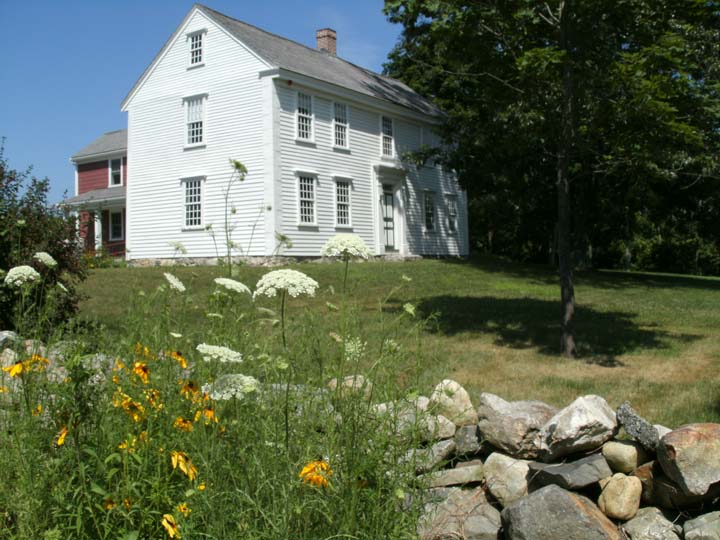
Today the Thoreau Farm Trust is raising funds to rehabilitate and maintain the farmhouse at 341 Virginia Road in which Henry David Thoreau was born in 1817. The house was originally located to the west of its current site but was moved to a more easterly location on the farm in 1878. Soon thereafter, another house was built on the original site. I was born in this “new” house in 1926. One hundred and nine years apart, Thoreau and I shared the same birthplace but we first saw the light of day in different birth houses on the same farm.

In 1997, the Town of Concord purchased the Breen family property, which included twenty acres of farmland and the original Thoreau birth house. This important purchase saved the land from development. It also saved the house from probable destruction and made possible its restoration and rehabilitation. In 2004, the house was listed on the National Register of Historic Places.

While farming in my time surely differed from farming back in 1817, it may be of interest to recall what farming was like at Thoreau’s birthplace in the second quarter of the twentieth century, since this was for all practical purposes the last generation of dairy farming in Concord. My parents operated the farm from 1916 to 1953. I knew it in the 1930s and 1940s and experienced the transition from horse to tractor. In spite of many improvements, the farm was never efficient by today’s standards and was certainly not very profitable. After 1953, the farm was divided between house lots and Hanscom Field air rights.

When my parents, Caleb Henry Wheeler and Ruth Robinson Wheeler, married and bought the property in 1916, they called it Thoreau Farm. Our farmhouse is now numbered 215 Virginia Road. The two connected barns, two silos, ice house, tool shed, brooder house and hen house are all gone now. Today the house is yellow; for us it was always white.

When my parents took over the farm, there was what we called the “old barn” to which they added a connecting concrete “new barn” to house sixteen milking cows. The old barn was used mostly for hay but also included stables for two farm horses and eventually housed the bull, calves, and heifers, and even a few milkers. It was built with long and large beams connected with trunnels or treenails. While I always assumed this old barn was there when the Thoreau birth house was located at this original site, it may have been erected in the post-1844 railroad era, when many larger barns were built.

Thoreau Farm contained about eighty acres. Though lacking Thoreau’s skills as a surveyor, I am attaching a rough sketch of how the farm layout appears in my memory.

I was the fourth of five boys. My older brothers were Henry, Frederick, and Caleb born about two years apart in 1918, 1920, and 1922; my younger brother, Warren, was born in 1931. Among other things, we represented an important supply of labor for the farm operations.

Life was not easy for my parents in the early years. At first my father supplemented income by picking up in his horse-drawn wagon the previous day’s milk production from ten other Virginia Road farmers as part of a relay to the larger dairies in Somerville or Boston. He was paid a dollar a day. This job ended when Mr. Prescott, who took the milk to the city, motorized, probably in 1917. I recall stories of those “olden” days when fences would break letting cows into the corn. A fox got into the chicken house. My mother was unwell and farm life in general went from crisis to crisis. This was before the oldest son and then the other sons were able to play a useful role.

As a farming strategy the cows were the basic year-round income producer but, until the boys left home, were supplemented by several cash crops, a few chickens and a major garden.

First came asparagus. According to a 1953 Concord Journal article by my mother – who became a local historian – Concord once raised more asparagus than any other town in the United States.[1] My father served as Secretary of the Middlesex County Asparagus Growers Association. Under their North Bridge brand we sent asparagus to market which I recall was very precisely bunched and trimmed with a maximum number of stalks (since fairly big stalks were considered better). It was sent to market in crates with waxed cardboard water trays. My mother and available boys old enough were awakened before breakfast in late May and June for the asparagus picking.

Strawberries were next, coming in June. We had between a half and a whole acre of “Howard 17s” or “Catskills.” Each year we had a new strawberry bed which had to be planted, cultivated and weeded. Runners were set at the last weeding in late summer. The boys were paid for picking. My recollection is that I was paid two cents a quart – and on a memorable record day I picked over one hundred quarts. We learned early to top off each quart with especially large berries. Mr. Tuttle, who lived on Lexington Road, picked up our trays of strawberries to be delivered to market in Boston ­ twenty-one quarts to a tray.

Next came raspberries. They ripened when the mosquitoes were in full sway in July. The raspberry bed harbored snakes and the stems had thorns. But from this unpromising environment came a wonderful fruit and a little more money to pay spring bills.

Perhaps less regularly we also grew sweet corn for market. A photograph shows my parents with baby Henry about 1920, packing corn for market.

My parents encouraged their sons to belong to the 4-H Club: Head, Heart, Hands and Health. A 1930 Concord Journal article contains Henry’s story of his garden for which he was awarded, at age eleven, a Massachusetts Horticulture Society Medal through the Middlesex County Extension Service. He reported total expenses of $6.08 and an income of $57.00, producing forty-two pecks of potatoes, seventeen pounds of tomatoes, and five hundred ninety-seven pounds of squash. He got a first prize at the Acton Fair on six Irish Cobbler potatoes and another on his squash.[2] A 1932 article tells us that the three brothers specialized, with Henry concentrating on parsnips, squash and tomatoes, Fred on corn and Des Moines squash and Caleb on shell beans and peas. Not only was the family to benefit from a large quantity of vegetables during growing season, but, until canning was replaced by freezing in the 1940s, we put up shelves of Ball jars of peas and yellow and green beans. We stored potatoes, squash, carrots and parsnips. We also dried kidney and lima beans for cold winter night “Boston Baked Beans.” Of course we also ate our full share of the cash crops. My mother served gigantic platters of asparagus consisting of the crooked stalks not suitable for North Bridge Brand marketing. In addition to huge strawberry shortcakes and berries with cream we also consumed great quantities of strawberries and raspberries in the form of ice cream and sherbet. The reward for crushing the ice and turning the freezer was a chance to lick the dasher!

Beyond the garden there were things which grew wild. In August we found mushrooms in the back pastures. There were blackberries for shortcakes, thimble berries for snacks and blueberries fresh and for jam. In September there were a few hazelnuts. Cranberries were found in a wild bog near “Murphy’s House” located behind Breens and Algeos. Mr. Murphy was from the “city” and had built a summer house in the woods which in my day was abandoned and certainly haunted. Wild Concord grapes grew up birch trees which were fun to climb and bend down for easier picking. Scores of jars of jelly resulted. The memory of the fragrance of grape juice dripping below the flannel bag hung in a kitchen corner is especially poignant. We also had apples, pears and plums. I recall one McIntosh tree, perhaps twenty Baldwins and several Russets. In the fall we took dropped apples to Fritz’s Cider Mill located on Lexington Road in Lincoln beyond Bloody Curve.

Chickens were important for keeping five boys with eggs – a poached egg every morning after Ralston, cream of wheat or oatmeal – except on Sundays when we had corn meal mush with maple syrup as a special treat. In the 1930s my brother Caleb decided to raise about fifty chickens as a 4-H project. In September of 1935 my mother wrote of his coming back from the Acton Fair with his pullet and pumpkins.

I inherited Caleb’s chicken business when he went off to college in 1939. After the 1938 hurricane my father had some fallen logs sawn into lumber which he used for constructing a tool house. With left over lumber he and I built a separate brooder house, permitting me to use the whole hen house for laying hens, thereby increasing the flock to about one hundred. I bought my Barred Plymouth Rock baby chicks from two elderly retired school teachers in Holliston who kept track of each hen’s performance. I paid a premium for chicks from hen’s producing over 220 eggs per year, enabling my flock to compete well among 4-H club participants. My flock produced between 22 and 24 eggs per bird in the best months.

Once during World War II I added to my repertoire a couple of pigs which I kept across the street below the orchard. They provided a welcome supplement to our diet in a time of strict rationing. My father grew a steer during this period. We used the Verrill lockers located on Thoreau Street for storing meat.

From the above it can be seen that our farm produced a large portion of the food needed for five growing boys. In financial terms the farm never made much money. My father worked seven days a week and seldom had a vacation. My mother worked hard, too. She worked on each of the cash crops in season. Year around she managed the children and produced the meals. On Mondays she processed many batches of clothes through a tumbling washer with tubs and ringers. The clothes were hung on a line behind the house, in the winter quickly turning to sheets of ice. On Tuesday she ironed shirts for husband and five boys. Even when we went off to college we mailed home our washing for her to do.

For the five years 1947-51 for which I have the farm account book, the average net income was $1,232 on an average gross income of $8,596. The non-monetized income in the form of milk, cream, eggs, vegetables and fruit was critical to survival. In addition, modest inheritances were received during the 1930s when things were especially tight. Among other things, they paid college bills. Even if the farm was not lucrative financially, at least from my point of view it was idyllic for growing up. But, after considering the account book, perhaps it is not surprising that none of the boys decided to take over the farm when my parents retired in 1953.

The farm day began about five-thirty or six o’clock when my father got up to milk the cows. As far back as I can remember we had a milking machine. Breakfast came about 7:30 followed by school for the boys and farm chores for my father. Winter chores included bringing hay to the cows from the old barn, throwing down from a silo a large cart of corn silage, feeding the horses and cleaning out the gutters behind the cows. There was a rail from which hung a manure carrier which took the manure out to what by spring was truly a gigantic pile. The manure carrier track was held up out doors by chestnut poles – left over from the days before all the chestnut trees were killed by blight. In the spring all that manure had to be spread on the fields. We had a manure spreader. However the boys developed strong biceps forking it into the spreader.

In the summer we let the cows out to pasture after breakfast. At evening milking time – about five o’clock – one of us would shout “co-boss – co-boss – co-boss – boss – boss” and the cows, if not already nearby, would file in the appropriate pecking order into the barnyard and barn for milking.

The milk had to be quickly cooled and kept cold until taken to the dairy to avoid bacterial growth. For a few years in my youth we activated our ice house. This meant buying blocks of ice cut from a local pond and storing them in sawdust. It was with some relief that we bought new electric cooling equipment in the late 1930s.

We belonged to the Farm Bureau. Each month Fred Jones (who also kept cows and ran a local dairy) received one freight car full of grain which members would pick up at a station siding. During my poultry-raising days I added a few bags of chicken feed to my father’s order.

Before the Hanscom base bought it in the early 1940s, we had a woodlot up the street on Virginia Road. This was one source of the shed full of firewood which fed two fireplaces. The living room fire burned much of the time in the winter and served as the family gathering place before and after dinner in the evening.

I recall the changes in our kitchen. First there was the ice box in the pantry, filled every two or three days in the warmer months by the ice man. Then we got a refrigerator. We had a Franklin stove in the kitchen which, after buying our electric stove, we replaced with a mini-stove before giving up the wood stove altogether.

During the 1930s my father gave permission to the Works Progress Administration (WPA) to cut down apple trees in our back orchard. This was intended to prevent the spread of apple pests which thrived on un-tended trees. One day, reminiscent of January 19, 1810 or Cold Friday mentioned by Thoreau in Walden, it was so cold that the axes broke. The men retreated to our kitchen stove to warm up, carrying with them an owl found in one of the trees. In warmer weather the WPA also cleaned out ditches draining our meadows. The Depression challenged my farmer parents’ understanding. While they took advantage of WPA programs they had a hard time understanding why people couldn’t get “real” jobs.

I also saw a transition in farm operations. During the late 1930s we graduated from horses to a John Deere tractor. At a tender age I raked hay with a horse and dump-style rake. In this era of loose hay, on hot June and July days my mother often “made” the load while my father and older brothers pitched up the forkfuls. (“Making” the load was a process of placing forks of hay carefully so that one bound another.) At the barn there was the reverse process with my father or one of the “big” boys unloading the hay one fork at a time. When the barn was quite full I would often be placed at the top of the back of the barn to stuff relayed forks of hay down into the eaves. The temperature could be mighty high up there. (In the winter, small boys discovered that the compacted hay left vacant places below the beams which were excellent for hide and seek!) When we graduated to the tractor we also went to “side delivery” rakes, hay-loaders and then hay-balers. My father knew that overexposure to sun would reduce the nutritional value of the hay and installed a hay blower, permitting the baling of hay with higher moisture content, finishing the drying in the barn.

Over time, growing hay became more scientific. To improve water control and increase production, my father cooperated with the Soil Conservation Service. In 1949 he received the Middlesex County Soil Conservation District Achievement Award. Conservation practices cited included: ten acres of meadowland drained by installing bedding ditches; 1200 feet of diversion ditch construction for drainage and erosion control; six acres of contour planting; eight acres of land cleaned of stone and brush for pasture; protection of clean-tilled land with cover crops; ten acres of pasture land fertilized and reseeded with a grass and legume mixture; twenty-one acres of hay land improved with fertilization and reseeding; and fourteen acres of pasture land fenced to permit rotational and controlled grazing. The same year, and again in 1950, he received the Gold Seal Award under Middlesex County’s Green Pastures Program.

The other major crop for feeding the cows was corn silage. Plowing, planting, cultivation and weeding were part of the spring and early summer routine. In September, before we had our own tractor, we hired Carl Davis from up the road to come with his tractor to power our silage cutter. The boys wielded short-handled hoes to cut the stalks. I often ended up in the silo, spreading and tramping the silage which came blowing in at the top. I recall putting the silage fork through my foot – leading to that painful series of tetanus shots. Later we put chopped green grass fodder in the silos instead of corn.

In the 1920s there was a controversy over corn borers. A rule was implemented requiring farmers to plow under corn stubble before winter. However, many farmers felt the regulation was scientifically flawed. The writer of one letter in the New England Homestead wondered whether corn borers or federal agents were the pests. An article in their August 9, 1926 edition quoted my father saying “…professors of universities bear us out that most of the ova are put into the silo and are surely killed in the fermentation, so why plow the stubble to preserve the ova that are left? I believe in obeying the law and have never been fined, but I do think that plowing corn stubble and daylight saving are two detriments to farmers’ welfare.” My father preferred a system where he could plant a cover crop or regular hay crop to germinate while the corn was still in the field. Forcing him to plow under the stubble meant either giving up a green manuring practice which both prevented erosion and added to soil fertility or giving up his system for starting a new field of hay. Beyond that, horse-drawn plows did a poor job of turning under big silage corn stubble. When my parents were called into court on the issue, Judge Keyes is reported to have asked if the law applied to the landlord when land was rented out. According to my mother the case was “set aside,” perhaps reflecting that the judge owned land rented to farmers who grew corn.

In 1933, Grandmother Wheeler who lived at what is now 120 Sudbury Road died and, in the division of property among her son and four daughters, my father and Aunt Julia received the farm land across the railroad tracks on Sudbury Road. Some of these fields had been in the family for nearly 300 years. They have now been replaced by what is now Crosby’s Market and, across the street, by the Southfield Road homes. For a few years we farmed the land on the Crosby Store side. We owned the land under Johnny Moreau s blacksmith shop located where the parking lot entrances and the Campbell Building are today. I recall our taking the farm horses here for shoeing and broken machinery parts for welding. When hardly ten years old I was allowed to drive the horses and wagon loaded with corn or hay from Sudbury Road to home. It made me feel pretty grown up. It helped that the horses knew the way.

The Sudbury Road land was rich. The silage corn grew very tall – so tall that a neighborhood thief wanting to pick the ears had to chop down the stalks. (As I write this, it seems hard to believe that story, but my memory ­ which sees most things from my youth as larger than they look today – is very firm!) In 1935 brother Fred took six stalks of this enormous silage corn to the Acton Fair, winning a first prize for my father.

We worried about fire and special care was taken to be sure that hay did not heat in the barn. There was one memorable Christmas Day when I looked out the back living-room window and saw smoke coming over the top of the barn. My brother Fred was quick to react and we called the fire department. A few minutes later we realized we were seeing steam from melting snow – too late to prevent an unnecessary routing out of firemen on Christmas morn. My face reddens even today when recalling that untimely false alarm.

Dairy farming had special problems in the 1930s. The price of milk went into the cellar and there was a time when it hardly covered the cost of grain. But a worse catastrophe befell us when the Massachusetts authorities told us that their tests showed every one of our cows tested positively to tuberculosis. We had to sell the cows for almost nothing and then have a cow-free farm for a year. Then we bought bred heifers and gradually got back in business. It was at this stage that my parents decided to grow Ayrshires – gradually developing a herd of purebreds with good records – sometimes near the top in the county. We named our cows after celestial stars. We belonged to the Ayrshire Breeders Association, the New England Ayrshire Club and the Massachusetts Ayrshire Club. We belonged to the Dairy Herd Improvement Association (DHIA) which sent a young man for two milkings each month to weigh the production of each cow and test for butterfat. This helped decide when to cull a cow and which calves to grow. I recall that Brud Tucker was one of these young men, before he became a veterinarian working with Dr. Russell.

Part of building the herd was having a good bull. In 1935 we bought as a calf Pennshurst Man of War 29th who contributed to improving our herd. My mother recalled sending the telegram to buy the bull calf. The telephone operator thought she was trying to place a bet on a horse and tried to help her word the telegram right. The bull had a specially built pen in the old barn which could withstand the force of an unruly big animal. There was also an exercise pen outside. Each morning and again in the evening my father opened doors and gates to form a runway for the bull to go between indoor and outdoor pens. The only problem with the set up was the occasional reluctance of the bull to go inside at night. One evening my impatient mother took it upon herself to chase the bull and landed near death in the Emerson Hospital after being badly gored. As sympathetic as my father was to women’s rights, he never reconciled himself to the appropriateness of my mother taking on the task of chasing bulls. I think that was the last time for her in that role. Eventually we switched to using artificial insemination and stopped keeping a bull. We belonged to the Middlesex County Selective Breeders Association. The reward for good breeding and better feeding was increased production. My father’s name was added to a National Honor Roll of The Purebred Dairy Cattle Association for achieving an average of 417 pounds of butterfat in 1950.

My father had a special love for plants and flowers. He had an uncanny ability to spot four leaf clovers. He also kept track of where unusual flowers grew. In the early spring there were pussy willows. In late spring we had rhodora blooming at a particularly wet spot to the back of the apple orchard across the street. Near the lane leading to the back of the farm were honeysuckle, fringed gentian and jack-in-the-pulpits. Just below the apple orchard there were columbines. My brother Henry discovered arethusa growing in Algeos’ swamp.

One by one the Virginia Road farms went out of business. First, Carl Davis gave up. The Algeos retired. Eddie Carlson stopped farming about the time the airport was built. My parents sold out in 1953. Carl Anderson’s pig farm went. Then Lawrence Kenny stopped market gardening. Jim Breen’s son (also Jim) kept on as a part-time farmer until he died.

A sleepy country road with two or three cars an hour has now become a well-traveled route to many homes and businesses. In this context it is admirable that the town of Concord has been able to preserve the Breen Farm which can take over the name Thoreau Farm from us next door, a bit of rural landscape in an increasingly urban part of town.

Note: This article, which has been slightly updated, was first printed in the 1999 edition of the Concord Saunterer published by the Thoreau Society. We gratefully acknowledge the Society’s permission to republish it here. Joseph Wheeler is a charter member and former president of the Board of the Thoreau Farm Trust.

1. Farming, by Ruth R. Wheeler, Concord Journal, July 16, 1953.

2. Concord Journal, January 23, 1930, page eight.

Joseph C. Wheeler is a charter member of The Thoreau Farm Trust. He served for five years as its first president and currently is clerk/secretary of the organization. This article is reprinted courtesy of The Thoreau Society, which published it in the 1999 edition of The Concord Saunterer.

Thoreau Farm Trust • PO Box 454 • Concord, MA 01742 • Tel. 978.369.3091 •