Welcome to the Thoreau Farm Trust!

Subscribe to our newsletter:

Make a Donation

Thoreau Society Will Move Offices to Thoreau Birth House

May 19th, 2005

The Concord Journal, May 19, 2005

The Thoreau Farm Trust, Inc. and the Thoreau Society have reached an Agreement in Principle that the Thoreau Society will move its offices to Henry David Thoreau’s birthplace on Virginia Road in Concord when the farmhouse is restored.

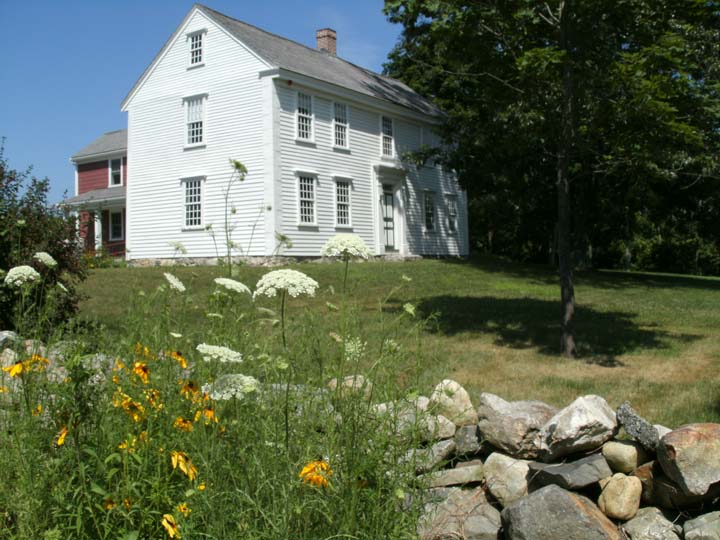
The Thoreau Farm Trust, Inc. (TFT) is a local nonprofit group seeking funds to restore and rehabilitate the farmhouse, which is listed on the National Historic Register as the Wheeler-Minot Farmhouse/Henry David Thoreau Birthplace. Far from turning the house into a museum or a relic, the TFT is committed to using the house in ways that carry Thoreau’s legacy into the future. This includes a restoration/rehabilitation plan based on energy efficient principles.

The property is currently owned by the Town of Concord, which purchased it, along with approximately 18 acres of surrounding farmland, in 1997. The purchase was made possible through a combination of public (both state and local) and private funds. In July 2004, the Town signed a purchase and sale agreement with the TFT stating that the birthplace and two acres of the land will be deeded to the TFT once the group has raised the initial $800,000 needed to restore and rehabilitate the farmhouse.

The rest of the land, which has been continuously cultivated for more than 300 years, is being leased from the town and farmed by Gaining Ground, a local nonprofit that grows food for the hungry.

Besides renting a portion of the house to the Thoreau Society, the TFT also plans to provide a community meeting room in the house, where small meetings of local organizations can be held. In addition, the public will be invited at certain times of the year to visit the room where Henry David Thoreau was born and learn about the entire history of this property, which played a significant part in Concord’s long and rich agricultural tradition.

The Thoreau Society, with an international membership of over 1,600, has a mission to honor Henry David Thoreau by stimulating interest in and fostering education about his life, works, and philosophy and his place in his world and ours; encouraging research on his life and writings; acting as a repository for material relevant to Thoreau; and advocating for the preservation of Thoreau Country.

This oldest and largest organization devoted to the legacy of an American author maintains the Shop at Walden Pond and serves as the official Friends group for Walden, supporting the educational programs, visitor services, park operations and conservation efforts at Walden Pond State Reservation.

In 1995, The Thoreau Society joined with the Walden Woods Project to open the Thoreau Institute, a research center on the hillside above Walden Pond in Lincoln. The Institute houses the collections of the Society, which are now available to the public in that repository. In 2003, the Society moved back to Concord, renting a house at historic Meriam’s Corner from Minute Man National Park.

Now the Thoreau Society, with its nationwide and worldwide constituency, is truly coming home – to the house where its namesake was born.

“We are delighted to announce this development,” stated Executive Director Jayne Gordon. “It would not be possible without the extraordinarily hard work of the Thoreau Farm Trust and the Town of Concord. We applaud their sensitivity to the historic significance of this house with its surrounding agricultural landscape, and to the importance of preserving, interpreting, and opening to the public Thoreau’s first home. Our members all over the country and in so many other nations have come to recognize the importance of having our headquarters at this very special place.”

Lucille Daniel Stott, President of the Thoreau Farm Trust, called the agreement with the Thoreau Society “serendipity.”

“Just as it seems right for the Thoreau Society, it is also a perfect fit for us,” said Stott. “The Society will provide a quiet but significant presence at the house while adding enormous educational value to our whole enterprise. This agreement has fueled our effort by making us even more devoted to raising the necessary funds, completing work on the house, and inviting the Society into its new home.”

The terms of the agreement, ratified by the boards of both organizations, specify that the Thoreau Society will work with the Thoreau Farm Trust to provide interpretive tours and educational programs at the site. The setting amidst cultivated fields is a perfect complement to the settings of Walden, the rivers, Estabrook Woods and the center of town, which all figured so prominently in Thoreau’s excursions, his journals and his published works.

An early summer event is planned to celebrate this announcement and details will be on the websites of both the Thoreau Farm Trust (www.thoreaufarm.org) and the Thoreau Society (www.thoreausociety.org).

Concord resident Lucille (Daniel) Stott is a freelance writer and editor and a former editor and managing editor of The Concord Journal. A shortened version of this commentary was published in the July 8, 2004 issue of The Concord Journal.

Thoreau Farm Trust Announces Leadership Gift

October 4th, 2004

For Immediate Release

Contact: Lucille Daniel Stott, president
Thoreau Farm Trust, Inc.
978-369-3091

October 4, 2004

THOREAU FARM TRUST ANNOUNCES LEADERSHIP GIFT

Concord, MA – At an afternoon reception held Sunday, Oct. 3, the Thoreau Farm Trust (TFT) announced its first major donation, a gift of $25,000 from a supporter who wishes to remain anonymous. The funds represent a first step in the TFT’s effort to raise the $800,000 necessary to gain title to the town-owned Thoreau birth house and two acres of surrounding land at 341 Virginia Road. The house was placed this year on the National Register of Historic Places but has remained uninhabitable since the Town of Concord purchased the 20-acre farm in 1997.
Last July, Concord’s selectmen signed a purchase and sale agreement with the TFT, stating that the house and two acres of the land will be turned over to the local nonprofit as soon as funds are raised to complete the first phase of TFT’s plans for the property: restoration and rehabilitation of the circa 1730 farmhouse.

Overall plans involve raising an additional $1.4 million to construct a barn on the property, which will serve as a small education center focusing on Thoreau’s legacy and on the history of farming in Concord as represented by the agricultural history of this property, parts of which have been in continuous cultivation for 275 years. Currently, the local philanthropic organization Gaining Ground is leasing part of the 20-acre farm to grow food for the hungry.

At Sunday’s event, which began at the Concord Art Association on Lexington Road, TFT President Lucille Daniel Stott updated the 65 invited guests about the group’s plans, and historic materials conservator Bill Finch of Beverly presented a photographic overview of some of the historic elements still present in the eighteenth-century farmhouse. Following the presentations, John and Lorna Mack hosted a reception at their neighboring Lexington Road home, where guests – many of whom own other historic residences in Concord – had a chance to tour their c.1650 Thomas Dane House.

Birth House Efforts Begin Trust Will Rehab Thoreau Site

July 15th, 2004

Maureen O’Connell, Staff Writer
The Concord Journal, July 15, 2004

When Lucille Stott, president of the Thoreau Farm Trust, first visited the aging, run down house on Virginia Road where Henry David Thoreau was born, she wasn’t expecting much.

“I didn’t think I was going to feel anything,” said Stott. “But walking into that room, believe me, I did. That’s why I’m here.”

She’s referring to the upstairs room on the eastern end of the house at 341 Virginia Road, where the author best known for “Walden” and “Civil Disobedience” was born on July 12, 1817.

One-hundred-eighty-seven years later, Stott welcomed friends, town leaders, historians and Thoreau enthusiasts to the home for the first of what she hopes will be many times. The Thoreau Farm Trust signed a purchase and sale agreement Monday with the town of Concord, for the home and 2 acres of the property, which the TFT hopes to restore and turn into an educational center for those studying Henry David Thoreau and the history of agriculture in Concord.

Farming was a part of the Virginia Road property before Thoreau was born, Stott said, and continued long after. Today, a portion of the land is still used by the organization Gaining Ground, which grows food for the hungry.

“Because Gaining Ground continues to cultivate the land, it will allow visitors to still experience a working farm,” said Stott.

The Thoreau Farm Trust will have two years to raise the $800,000 necessary for it to begin phase one of the restoration: Changing the exterior of the house to be as it appeared in 1878, when the house was moved to its present site, restoring the bedroom where Thoreau was born in 1817, and rehabilitating the home’s remaining interior for possible residential use. If the fund-raising goal is met, the house and two acres will be purchased from the town for $1.

Once phase one is completed, the TFT hopes to construct a barn on the property to serve as an education center, focusing on not only agriculture, but Thoreau’s life as a naturalist, environmentalist and author. Lastly, the TFT hopes to create an endowment to ensure continued operation of the educational center at the birth house site.

Anne Shapiro, a member of the Board of Selectmen, said Monday she and her fellow board members were “proud” of the work put into preserving the farmhouse so far.

“Many Concord citizens and others answered the needs of the property,” said Shapiro, “I’m thrilled and humbled by the efforts of our citizens.”

Stott said she first became involved with the property, also known as the Wheeler-Minot Farm, in 1996, after its last owner, James Breen Jr., died. As the editor of The Concord Journal, she learned from a neighbor that there were plans to develop the site into several single-family homes, and to tear down the Thoreau birth house.

“Gradually, citizens began coming together to advocate for the house,” said Stott. “Mrs. Breen was willing to negotiate, but the selling price wasn’t cheap.”

At that time, the Thoreau Farm Trust was able to raise $800,000 to buy the property. These funds were added to $160,000 allocated by Town Meeting to purchase the 104-acre farm and house.

Joseph Wheeler, who was the first president of the Thoreau Farm Trust, said it was his mother Ruth Wheeler’s dream to see the home restored

“She was interested in preserving this historic house, but didn’t think it was possible,” said Wheeler. “Now, I think we’ve found a formula.”

Coming from London, England, was Mark Thoreau, Henry David’s third cousin five times removed. Fresh from an interview with the BBC about his famous cousin, he called the plan to restore the home “absolutely brilliant.”

Celebrating Another July 12 Milestone At Thoreau’s Birth House

July 11th, 2004

On Monday, July 12, at 4 p.m., the Thoreau Farm Trust and the Town of Concord will celebrate the signing of a purchase and sale agreement for the 18th-century farmhouse where Henry David Thoreau was born – on July 12, 1817.

It’s an exciting moment. After a year of planning and negotiation, the town has agreed to sell the house and two acres of surrounding land to the Thoreau Farm Trust for $1 as soon as the Trust has raised the necessary funds to rehabilitate and restore the house, which was placed this year on the National Register of Historic Places.

Originally located at what is now 215 Virginia Road, on a large farm owned by Henry’s grandfather, Jonas Minot, the house was moved in 1878 and now stands at 341 Virginia Road on twenty acres that were part of the original farm.

This beautiful farmland was preserved and the historic farmhouse saved from possible destruction by a town purchase in 1997. The $960,000 used for the purchase included only $160,000 of town funds. The remainder was raised through major contributions from state, corporate and foundation grants, the Educational Collaborative for Greater Boston (EDCO), Massport, and many private citizens.

I remember well the 1997 Town Meeting, when a wave of orange ballots signaled overwhelming approval of the purchase after a presentation by Sally Schnitzer, then chair of the Board of Selectmen. Sally said the town would use the land to continue the important farming tradition at the site; to provide a place for citizens to enjoy the rural atmosphere; and to honor the legacy of Concord’s most famous native son through the restoration and rehabilitation of his birth house and modest educational programming.

Those raised ballots were an enthusiastic recognition of the hard work of many people: members of the Breen family, who owned the house at the time; Doris Smith, a neighbor who first alerted The Concord Journal to potential development; Tom Blanding, the eminent Thoreau scholar, who helped establish the historic value of the house and land; Town Manager Chris Whelan, who navigated the town through the process; and several devoted advocates, including then – Selectman Judy Walpole, Helen Bowdoin, Joe Valentine, Court Booth, Jack Green of EDCO, and Joe Wheeler, who was born in the house that was built at 215 Virginia Road after the birth house was moved.

The successful purchase was also a model of public-private partnership that continues to this day. Acreage at the site has been leased to Gaining Ground, the local nonprofit farm organization that grows and harvests food for the hungry. In this way, the property’s long farming tradition has been preserved and the public has enjoyed access to the open land.

Determining the future of the house has been a more complicated process, in part because it is a historic structure in need of major rehabilitation. After the purchase, the town put out a call to private citizens to find a way of rehabilitating the house and providing educational programming. The Thoreau Farm Trust, a nonprofit, volunteer citizens’ group, was born in response to that call.

The Trust’s first plan involved a partnership with EDCO, a respected educational organization and a major contributor to the purchase through a donation from the Seefurth family, whose patriarch sought a place to teach younger generations about Thoreau and his legacy. The Trust proposed to lead a fundraising effort and plan the house restoration, while EDCO offered to erect an adjacent barn and oversee educational programming. When in 2001 negotiations between the town and EDCO broke down over proposed uses of the barn, the Trust lost its partner. It then decided to suspend its own plans and seek alternative ways to proceed.

A fresh opportunity presented itself in 2003, when the town issued a new Request for Proposals for the house and its two-acre lot, and the Thoreau Farm Trust decided to step forward once again. This time, we were greatly aided by the expert advice and practical help of BayTrust, Inc., a recently formed nonprofit development company based at Clock Tower Place in Maynard. With the advocacy and support of BayTrust’s president, Joseph Mullin, and vice-president, Patricia Marcus, the Trust negotiated a successful purchase and sale agreement, prepared cost estimates for the rehabilitation and restoration of the house and the construction of a barn, and engaged top-notch historic preservationists to guide in the development of construction and re-use plans.

A solid year of hard work—and enormous help from Concord’s Planning Director Marcia Rasmussen and her associate, Carol Kowalski—led to the June 28 Board of Selectmen vote to sign a purchase and sale agreement.

So, who is the TFT, where do we go from here, and what value will all this have for Concord?

The Thoreau Farm Trust is currently composed of ten board members, all volunteers with a strong interest in Thoreau and the history of this agricultural property: Joe Wheeler, our founding president and a past president of the Concord Historical Commission, is now our clerk/secretary; Court Booth, director of Concord-Carlisle Adult and Community Education, is our vice president; John Mack, a member of the Historical Commission, the Mill Brook Task Force, and the Thoreau Society board, is our treasurer. Other members are Helen Bowdoin, Land Conservation Coordinator at the Walden Woods Project, Jayne Gordon, executive director of the Thoreau Society; Michael Kellett, executive director of RESTORE: The North Woods; Brian Donahue, director of Environmental Education at Brandeis Univeristy; Barbara Lambert; a historic preservation consultant and resident of the Thomas Riggs House in Gloucester; and Tim Rodgers, a software engineer, Virginia Road resident, and board member of Gaining Ground. I am currently serving as president.

Last fall, we asked Molly Eberle, a Concord resident with extensive development and community service experience, to serve as our part-time executive director.

The purchase and sale agreement stipulates that the Trust must raise the funds to rehabilitate and restore the house—$800,000—before taking title to the property. That is where we go from here.

But the Trust’s overall vision involves a more comprehensive plan and a total fundraising goal of $2.2 million. That plan includes the construction of a barn to serve as an educational center, the implementation of modest educational programming about the history of agriculture in Concord and the legacy of Henry Thoreau; a landscape design that maintains the rural aspect of the property, and the beginning of an endowment to ensure future maintenance of the house, barn, land, and programs.

Why is all this important, especially in a town that already celebrates Thoreau in important ways, most notably at Walden Pond, at The Concord Museum, and in the Special Collections of the Concord Free Public Library? Throughout its years of exploration, the TFT has benefited from the support and advice of representatives of these and other historical sites in town as well as the Walden Woods Project in Lincoln. We have learned that there are, in fact, important roles this property can play.

Currently, there is no place in Concord to celebrate the rich agricultural history of the town, and we feel we have the perfect spot to do this. The house – identified on the National Register as the Wheeler-Minot Farmhouse/Henry David Thoreau Birth House – has a long agriculture history that preceded and followed Thoreau’s lifetime. It provides an ideal setting for placing Thoreau and his work in the context of his family, his community, and his connection to and strong interest in the town’s farming tradition. One of the Trust’s major goals is to provide materials at the site that trace the evolution of agriculture in Concord, with Thoreau’s lifetime as the important pivot. We also intend to include in our landscaping design plans for small house gardens reflecting historic farming practices. And because Gaining Ground continues to cultivate the land, visitors to the house will have the opportunity to experience a working farm.

In addition, the barn will be used in part as a place where students and teachers can gather to discuss a visit to Concord’s historic sites. Right now, there is no place for this to happen comfortably, so Thoreau Farm will fill an important niche while complementing—not duplicating—programming that already exists.

My work with the Trust has always been grounded in my belief that there must be a place in Concord a simple, unassuming place—where Thoreau’s full life, not just the part he spent at Walden Pond, can be celebrated in the modest way he lived it. By purchasing the house and part of the farm where he was born, the people of Concord paved the way for this to happen in the agricultural landscape he knew so well.

Thoreau’s birth 187 years ago on July 12 was a humble beginning, as all births are. I hope you will join us on July 12, 2004, for another humble beginning, as we set out to give new life to Thoreau Farm.

Concord resident Lucille (Daniel) Stott is a freelance writer and editor and a former editor and managing editor of The Concord Journal. A shortened version of this commentary was published in the July 8, 2004 issue of The Concord Journal.

Nonprofit Group to Restore the Birthplace of Thoreau

July 1st, 2004

“Nonprofit Group to Restore the Birthplace of Thoreau”, The Boston Globe, July 1, 2004.

Boston Globe article

Thoreau Farm Trust Signs Purchase and Sale Agreement for Thoreau Birth House

June 22nd, 2004

For Immediate Release

Contact: Lucille Daniel Stott, president
Thoreau Farm Trust, Inc.
978-369-3091

Thoreau Farm Trust Signs Purchase and Sale Agreement for Thoreau Birth House

June 22, 2004

Concord, MA – The Thoreau Farm Trust, Inc., a small, nonprofit citizens group dedicated to the rehabilitation and restoration of the Henry David Thoreau birth house, (341 Virginia Road, Concord), is scheduled to sign a purchase and sale agreement with the Town of Concord on Monday, June 28, for the house and two acres of surrounding land. The signing will take place at the Board of Selectmen’s meeting at the Concord Town House, 22 Monument Square. The meeting begins at 7:30 p.m.

The Town of Concord purchased the house (designated by the Concord Historical Commission as the Wheeler-Minot Farmhouse/Thoreau birth house) and 20 acres of surrounding land, in 1997 from the Breen family, following a Town Meeting vote that spring. Only $160,000 of town funds were used in the $960,000 purchase, with the rest being raised through corporate and foundation grants, a donation from Massport, a state grant, and many private donations. The purchase guaranteed that the historic house would be saved from destruction and the farmland preserved from development.

Currently, 18 acres of the land are being leased by the Town of Concord to Gaining Ground, a Concord-based nonprofit farming group that raises food for the hungry. At the time of the purchase, the Town of Concord put out a call for local citizens to take on the rehabilitation of the house, which is currently uninhabitable.

As a condition of the purchase and sale agreement, the Thoreau Farm Trust (TFT) will have two years to raise the necessary funds to restore and rehabilitate the house. When the necessary funds have been raised, the TFT will take title and begin work on the house. The TFT’s plans involve restoring the exterior of the house to its appearance at around the time it was moved from one side of the original farm to the other, in 1878. The room where Thoreau was born in 1817, which contains many elements of its original historic fabric, will be restored to its appearance at the time of his birth. The rest of the interior will be rehabilitated for habitation and/or use by the Thoreau Farm Trust, with all historic fabric carefully preserved in the process. The TFT will also be raising funds for the next two phases of its proposed plans for the site: construction of a barn to serve as a small education center and the implementation of modest programming. Education at the site will focus on the history and tradition of agriculture in Concord and on Thoreau’s life in the Concord community and his important legacy as a naturalist, environmentalist, and author.

During the past year, the Thoreau Farm Trust hired a part-time executive director, Molly Eberle of Concord, to oversee its work. It also engaged the services of two consultants, architect Larry Sorli of Carlisle and historic materials conservator Bill Finch of Beverly. Working as a team, Sorli and Finch helped shape the TFT’s restoration and rehabilitation plans for the house, and these preliminary plans were accepted by the Massachusetts Historical Commission as consistent with the Secretary of the Interior’s guidelines for the treatment of historic structures. Earlier this year, the house was placed on the National Register of Historic Places.

The TFT has also benefited from the help of BayTrust, Inc, of Maynard, a nonprofit development company dedicated to helping communities implement projects involving preservation and affordable housing. BayTrust’s president, Joe Mullin, and other representatives of the company, were instrumental in providing advice to TFT board members during negotiations with the Town of Concord.

“We have been working a long time for this day,” said Lucille Daniel Stott, president of the Thoreau Farm Trust. “We are very grateful to the Town of Concord for its help and support throughout these negotiations and for its confidence in us. We have a lot of work ahead of us to raise the funds we need to take title to the property and then complete the remainder of the project. But we have received many signs of support from local residents and interest from beyond Concord as well. The main reason I became involved in the Thoreau Farm Trust back in 1998 was my firm belief that Concord needed a small place of its own, aside from the Walden Pond cabin, to acknowledge Thoreau as a family man and town citizen. The fact that he was born on a large farm, with historical significance that preceded and followed his birth, also allows us to use the site as a way to honor the long and incredibly rich farming tradition in Concord. We see our project as a complement to the other historical sites in town – as a way to fill a niche while forming supportive bonds with other institutions.”

Stott, a freelance writer and editor, is editor of Appalachia, the mountaineering and conservation journal of the Appalachian Mountain Club, and a former editor and managing editor of The Concord Journal. Other members of the Thoreau Farm Trust include: Courtland Booth, director of Concord’s Adult and Community Education; Helen Bowdoin of the Walden Woods Project; Brian Donahue, director of Environmental Studies at Brandeis University and author, most recently of The Great Meadow: The Nature of Husbandry in Concord, published by Yale University Press; Jayne Gordon, executive director of the Thoreau Society; Michael Kellett, executive director of Restore: the North Woods; Barbara Lambert, a historic conservationist; John Mack, treasurer of the Thoreau Society and member of several Concord conservation/preservation organizations; Tim Rodgers, a Virginia Road neighbor of the property and Gaining Ground board member; and Joseph Wheeler, a member of the Concord Historical Commission, a board member of the Thoreau Society, and the charter president of the Thoreau Farm Trust. For more information on the Thoreau Farm Trust, visit our website at www.thoreaufarm.org.

Mary Minot and the Thirds of Widow

January 2nd, 2004

Prior to the 20th century, a woman’s security and status hinged largely on the success or failure of the men in her life, particularly her husband. Under such circumstances, widowhood could be an economic and social as well as a personal catastrophe. Lacking effective means of self-support and deprived upon marriage of most of the legal rights associated with property ownership, a widow was protected to some extent by the English common law and early American practice of assigning “widow’s thirds” (also known as the “right of dower”), which assured her the use of a third of her deceased husband’s real estate for life, or until she remarried. (The right generally did not extend to personal property, the ability to own which a woman gave up when she married.)

While a man might provide amply for his wife in a will or through other means, she was guaranteed widow’s thirds even if her husband died without leaving a will, as was frequently the case. Well into the 19th century, in Concord as elsewhere, the right of dower was often all that stood between a widow and homelessness.

Henry David Thoreau, one of Concord’s best-known natives, was born in 1817 in the present 341 Virginia Road, in a room within the widow’s thirds of his grandmother, Mary Jones Dunbar Minot (Minott), widow of Captain Jonas Minot. A document dated April 17, 1813 in the Concord Free Public Library Special Collections defines the scope of Minot’s thirds in detail, specifying the east chamber on the second floor-where her grandson came into the world a few years later-as part of her dower. The recent signing of a purchase and sale agreement between the Town of Concord and the Thoreau Farm Trust for the purpose of ultimately restoring and meaningfully using the Thoreau birth house gives this document fresh importance in Concord’s social and literary history.

Born in 1735, Thoreau’s step-grandfather Jonas Minot was a prosperous farmer, a landowner in and beyond Concord, a descendant of 17th century Concord families (Wheeler as well as Minot), a town official (constable and selectman), and an officer during the Revolution. In 1759, he married Mary Hall, with whom he had nine children. The first Mrs. Minot died in 1792. In 1798, Jonas Minot took as his second wife the fifty-year-old widow Mary Jones Dunbar of Keene, New Hampshire. The new Mrs. Minot brought to the Virginia Road household the children of her first marriage to the Reverend Asa Dunbar, who had died in 1787. Her young daughter Cynthia Dunbar-born just before her father’s death, later the wife of John Thoreau and mother of Henry David Thoreau-thus spent a significant part of her early life on the Minot farm.

Jonas Minot died on March 20, 1813, leaving Mary Jones Dunbar Minot once again a widow. The boundaries of her widow’s thirds were established less than a month later. They were recorded with minute precision, revealing the preference of our forebears to trust in agreements and contracts rather than in the good will of their fellow human beings in clarifying potentially ambiguous property situations. In this, the document in the Library Special Collections is similar to many others like it, which not only specify the demarcation between the widow’s and the heirs’ portions of house, barn, outbuildings, and land, but also spell out the rights of way permitted the various parties and any other privileges (use of hearth, oven, well, and sink, for example) accorded the widow.

Old documents characteristically describe property in terms of landscape features which have long since lost their familiarity. The land that was Mary Minot’s to use was defined in relation to “the Mill yard … Road across the Meadow to Reuben Browns land … the ditch to land late of Capt. Stephen Jones … land of Capt. Bates … the onion garden-meadow … land of Wm. Mercer … land formerly of Eben[eze]r Stow … land of Mather Howard … the fence at the top of the hill … the brook … the little orchard so called … the back pasture adjoining the House … a stake at the end of the wall … the old barn … the top of the great rock … the new Barn … the bars by the lower well,” and so on. The fact that the Jonas Minot farmhouse was moved to its present location in 1878 from the site of the house now numbered 215 Virginia Road further complicates understanding of the exact boundaries delineated.

Leaving nothing to chance, the document explicitly grants Jonas Minot’s heirs the right “to pass and repass with cattle teams and otherwise through said bars by the lower well” and to traverse in the course of normal farm operations (carting dung and watering cattle, for instance) other areas designated for the use of Mary Minot.

The Widow Minot was assigned the “front room & chamber & Garret over it in the east end of the House and one half of the front entry in common and the bed room in the north westward of the House and the celler under the front room as far north as the celler window then running west in a parrelel line with the front of the House to the west side of the celler with a priveledge to pass and repass to it and a priveledge in the kitchen and sinkroom equal to 1/3 part in common.” Her dower included use of the back yard and the well, too, and “one half of the wood & Chaise house & … laying and cutting wood in the wood yard east of the House the door yard in front and at the west end of the House.” She had kitchen, oven, and sink privileges, as well, and the right to go out by the back door.

Such specificity placed the respective rights of widow and heirs above the vicissitudes of family relations. Still, it is unclear how easily enforced a widow’s rights were in cases where there was bad feeling between the parties involved.

After Jonas Minot’s death in 1813, his personal property was auctioned. For whatever reason, Mary Minot chose not to take advantage of her widow’s thirds of his real estate. Perhaps farm life in a location remote from the village center simply lacked appeal for a woman of sixty-five. She mortgaged her share of the farm to Josiah Meriam and rented and lived in part of what is now 201 Lexington Road. She later repaid the mortgage, which allowed her daughter Cynthia, son-in-law John, and their growing family to move into the farmhouse. But John Thoreau found it difficult both to farm on the outskirts of Concord and to keep store in the town center. In March of 1818, when Henry David-or David Henry, as he was named-was eight months old, the Thoreaus left Virginia Road, and rented another part of the house where Mary Minot then lived. They remained there a short time before moving to Chelmsford. Not long after they left Virginia Road, the farmhouse was sold to settle Jonas Minot’s estate.

Perhaps not coincidentally, Mary Minot’s grandson would later use the concept of widow’s thirds metaphorically in his writings. Thoreau wrote in “Chesuncook” (a chapter of The Maine Woods), for example: “These Maine woods differ essentially from ours. There you are never reminded that the wilderness which you are threading is, after all, some villager’s familiar wood-lot, some widow’s thirds, from which her ancestors have sledded fuel for generations, minutely described in some old deed which is recorded, of which the owner has got a plan too, and old bound-marks may be found every forty rods, if you will search.” In relation to the landscape, Thoreau here and elsewhere applied the term “widow’s thirds” to suggest neglected areas once cultivated, not genuinely wild, less powerful than true wilderness.

Widows in Massachusetts today fare somewhat better than they did in Mary Minot’s time. Now when a man dies intestate, his widow is entitled to a larger and more encompassing share of his estate-personal as well as real-than was then standard.

Despite their widow’s thirds, Mary Minot and many of her contemporaries struggled in widowhood, their dowers insufficient to ensure a tolerable quality of life. The Library Special Collections include a poignant letter written in 1815 by the Reverend Ezra Ripley of the First Parish to solicit financial aid for Mrs. Minot from the Masons. Ripley wrote: “[In] the settlement of the estate of her … husband, Jonas Minot … she has been peculiarly unfortunate, and become very much straightened in the means of living comfortably; … individual friends have been … generous, otherwise she must have suffered extremely; … being thus reduced, and feeling the weight of cares, of years and of widowhood to be very heavy, after having seen better days, she is induced by the advice of friends, as well as her own exigencies, to apply for aid to the benevolence and charity of the Masonic Fraternity.” Only later in the 19th century would women’s legal and economic status begin to improve.

Copyright 2004 L.P. Wilson.

Leslie Perrin Wilson is Curator of the Concord Free Public Library Special Collections, a writer on local historical and literary topics, and a regular contributor to The Concord Journal, where this article first appeared. She is on the Advisory Board of the Thoreau Farm Trust.

Save This Old House

April 2nd, 2002

“Save This Old House”, Ryan Robbins, This Old House, 2002.

This Old House

Where Thoreau was Born

April 2nd, 1999

Joseph C. Wheeler

Thoreauvians know that Henry David Thoreau was born on Virginia Road in Concord, Massachusetts, as he said, “in the very nick of time.”[1] In 1997 the Town of Concord bought Thoreau’s birth house and some twenty acres, saving the land from development. The Thoreau Farm Trust, a nonprofit citizens group, is negotiating with the Town to restore and manage the house. In this article I will consider the importance to Thoreau of this house and of one of the men who owned it, Captain Jonas Minot (1735-1813).[2]

Thoreau’s grandmother, Mary Jones (1748-1830), married the Rev. Asa Dunbar (1745-1787) in 1772. After her husband died in 1787, at the age of forty-one, Mary remained in Keene, New Hampshire. Eleven years later, in 1798, she married the widower Captain Jonas Minot of Concord, Massachusetts. By this time the youngest of Jonas’ nine children was nearly twenty. Mary brought her own children with her to live on the farm with her new husband. Mary’s daughter Cynthia Dunbar, who became Thoreau’s mother, lived on the Virginia Road farm some fourteen years before her marriage in 1812 to John Thoreau. After Jonas Minot died in 1813, Mary Minot asked Cynthia and John Thoreau to take over her “widow’s third” of the farm, but they left it in 1818, less than a year after their son Henry David Thoreau was born there. Jonas Minot was the only father Cynthia knew, since her own father died a month after her birth.[3]

Lemuel Shattuck, in his History of the Town of Concord, speaks of the Minots as a distinguished family going back to Thomas Minot, Secretary to the Abbot of Walden in Essex.[4] Thomas was Jonas Minot’s great-great-great grandfather. When Thoreau in his Journal quoted Shattuck on this he understandably added an exclamation point after the word “Walden.”[5] By coincidence the Walden we all associate with Thoreau received its name from his step-relatives!

Thomas Minot’s son George, born in 1594, and Jonas’ great-great grandfather, came to New England among the first settlers of Dorchester. He had four sons: John, James, Stephen and Samuel. John Minot (1626-1669), Jonas’ great grandfather, in turn, had four sons: James, John, Stephen and Samuel. This James Minot, who was born in 1653 and was Jonas’ grandfather, attended Harvard and came to Concord about 1680. Shattuck tells us that he preached in Stow, Massachusetts, in 1685, for twelve shillings six pence per day “one half cash and one half Indian corn.” He “practiced physic, was a captain, justice of the peace, representative [to the Massachusetts "General Court" or house of representatives] and, eminently, a useful man.”[6] He died in 1735.

Here I must explain that the story of the Concord Minots is also a story of Concord Wheelers. There were a number of Wheelers among the early settlers of Concord: George Wheeler, Obadiah Wheeler, Lt. Joseph Wheeler, Capt. Thomas Wheeler, Timothy Wheeler and Sgt. Thomas Wheeler. The relationship among these Wheelers is not completely clear but it is understood that Capt. Thomas Wheeler (a hero of King Philip’s War) and Timothy Wheeler were brothers and Sgt. Thomas Wheeler was their nephew.[7] (Incidentally, Charles Stearns Wheeler of Lincoln, whom Thoreau knew at Harvard, was a direct descendant of Sgt. Thomas Wheeler.)

Concord’s Capt. James Minot, Jonas’ grandfather, married Rebecca Wheeler (1666-1734), the daughter of early settler Timothy Wheeler (c.1601-1687). Timothy Wheeler, among other things, had come to own the mill in Concord. (The shopping area at the center of Concord is still called the “Milldam,” this being where the settlers had dammed the brook and established their first mill.)

Timothy Wheeler, who died not long after Rebecca’s marriage, left her the mill in his will.[8] This made the James Minot family among the more prosperous inhabitants. Of course the definition of prosperity has evolved through the years. An assessors report done in 1717, the oldest assessors report remaining in Concord’s records, valued their estate at about forty pounds, half in real estate and the rest consisting of one horse, two oxen, five cows, nine sheep and “faculty.” “Faculty” was assessed for tradesmen and blacksmiths and in this case presumably covered the equipment for the mill). That property put the Minots, in wealth, among the top ten percent of Concord’s citizenry.[9]

James and Rebecca Wheeler Minot had ten children. The fifth of these was also named James (1694-1759) and Shattuck called him “one of the most distinguished men of his time. He was a military officer about thirty years, and advanced to colonel, justice of the peace, representative, and a member of the King’s Council”[10]

The tenth child of James and Rebecca Wheeler Minot, was Samuel Minot (1706-1766) who married Sarah Prescott. Samuel and Sarah had three children: Samuel, Jonas and Thankful. Sarah Prescott was a granddaughter of early settler George Wheeler. Thus Jonas was directly descended from two of those early-settler Wheelers, with both George and Timothy his great-grandfathers. In a second marriage to Sarah’s younger sister, Samuel had five more children. Like his father, James, and his uncle Samuel, this younger Samuel Minot was a prominent citizen, serving as a deacon and captain and as a member of the Board of Selectmen from 1756 to 1758 and again in 1762.[11]

I turn now to the previous ownership of the land where Thoreau was born and this takes us back to those “early-settler” Wheelers, specifically to Sgt. Thomas Wheeler (1625-1704) who obtained substantial land in Concord’s East Quarter in what were known as the first and second “divisions.” The area is about two miles from the center of town. He thus became the first European owner of the land where Thoreau was born several generations later. Sgt. Thomas Wheeler married Sarah Meriam (died 1677) who was the daughter of Joseph Meriam (1630-1677). Joseph Meriam owned the house at what became known as Meriam’s Corner, made famous on the nineteenth of April in 1775 by the Yankee farmers who, following the encounter earlier in the morning at the Old North Bridge, began there the harassment of the British troops that continued all the way to Boston.

Sgt. Thomas and Sarah Meriam Wheeler had ten children, among them John (1655-1736) and Timothy (1667-1718) who each received from their parents large parcels of land on Virginia Road: John got the land where Thoreau was born and Timothy the land further up the street where his handsome saltbox house still stands. When John Wheeler died, his property was left to his widow (his second wife, Sarah Farwell Jones) and his children. Later, the estate sold the property to their cousin, Deacon Samuel Minot. The deed mentioned a home and barns on the property. This is the basis for the suggestion [13] that the Thoreau birth house might be dated from 1678 when, it was speculated, Sgt. Thomas Wheeler would have built the house for son John’s wedding to his first wife, Sarah Stearns. But this is apparently not the case.

We know that Deacon Samuel Minot did not buy the John Wheeler property for himself. Since his first son would inherit the family home on the Bay Road (now Lexington Road) Samuel apparently wished to buy the Virginia Road property for his second son, Jonas. He quickly conveyed the property to Jonas “for love and affection.” It now seems likely that in doing so he replaced the John Wheeler house on the property at the time he purchased it with a new house built about 1759 when his second son Jonas married Mary Hall of Westford. [15] This “new” house is the Thoreau birth house.

Jonas Minot and Mary proceeded to have nine children. Jonas was an active citizen in Concord. As early as 1762, when only twenty-seven, he was appointed by the Town Meeting as a constable. The position of constable was not particularly desirable since it involved collecting taxes from the neighbors. The town records tell us that “for his sarvis (sic) as constable [he was paid] the sum of five pounds nine shillings and two pence.”[16] In 1765 the Town Meeting appointed Jonas as “Culler of Staves & serveyer of bords, Shingles & Clabords.”[17] In 1767 Jonas Minot was appointed by the Town Meeting as a member of the Board of Selectmen (as the town council is called in New England). He served until 1770.[18] To carry out one of the duties of the Board, in 1768 Jonas was selected to “meet such as May Legally appear to Perambulate Between Concord & the Towns of Lincoln and Bedford the Eighteenth Day Instant.”[19] (This was an annual ritual to assure that the adjoining towns knew and agreed on the boundaries.) In view of his record of leadership it is not surprising that when, in 1775, tension was building between the citizens and Governor Gage in Boston and the Town Meeting decided to appoint a “Committee of Safety,” Jonas Minot was one of the nine men selected for this critical role.[20] After the war Jonas continued to be appointed by the Town Meeting to positions of trust.

Jonas Minot had properties in New Hampshire. He apparently owned most of what is now Wilmot, New Hampshire. We can speculate that his frequent trips to see his properties may have put him in touch some years after the death of his first wife with the widow Mary Jones Dunbar, then living in Keene.

If we are right that Samuel Minot built the Thoreau birth house for son Jonas’ wedding to Mary Hall in 1759, the relative wealth of the family might explain the comparatively high style of the house, with its hand hewn quoins, its twelve over twelve windows with sculptural molded hoods and its beautiful door (described as having a “lavish denticulated cornice and elegant pilasters” and as being a “masterpiece of Georgian design and taste”).[21] It was a house built by a prosperous Concord farmer and landholder.

That Jonas continued to enjoy the relative prosperity of the Minot family is supported by a story told by the Society for the Preservation of New England Antiquities (SPINEA) which owns the Charles Barrett house in New Ipswich, New Hampshire. This stately mansion was built by textile mill owner (and former Concordian) Charles Barrett, Senior for his son at the time of his wedding to Jonas Minot’s daughter, Martha, in 1799. SPINEA cites the “tradition” that Jonas promised to provide furniture for “as large and fine a house as Mr. Barrett could build.”[22] The Barretts were a distinguished Concord family: Colonel James Barrett commanded the troops on the 19th of April in 1775. There had been earlier examples of marriages between the Barretts and the Minots and these close family ties clearly continued between the New Hampshire branch of the Barrett family and the Concord Minots.

Thoreau’s Journal reflects a number of supper table conversations Thoreau had with his mother, Cynthia, about her life on the farm with Captain Jonas Minot.

Of Captain Minott, mother says her father-in-law [step-father] used to roast and eat a long row of little wild apples reaching in a semicircle from jamb to jamb under the andirons on the reddened hearth, but he had a quart of new milk regularly placed at the head of his bed which he drank at many draughts in the course of the night. It was so the night he died, and my grandmother discovered his dying by his not turning over to reach his milk. I asked what he died of, and mother answered apoplexy! At which I did not wonder. Still this habit may not have caused it.[23]

Another time Thoreau writes:

My mother was telling tonight of the sounds which she used to hear summer nights when she was young and lived on Virginia Road – the lowing of the cows, or cackling of geese, or the beating of a drum as far off as Hildreth’s but above all Joe Meriam whistling to his team, for he was an admirable whistler. Says she used to get up at midnight and go and sit on the door-step when all in the house were asleep and she could hear nothing in the world but the ticking of the clock in the house behind her.[24]

Mother remembers the Cold Friday [January 19, 1810] very well. She lived in the house where I was born. The people in the kitchen – Jack Garrison, Esther, and a Hardy girl – drew up close to the fire, but the dishes which the Hardy girl was washing froze as fast as she washed them, close to the fire. They managed to keep warm in the parlor by their great fires.[25]

Again, Thoreau writes:

[I was] born July 12, 1817 in the Minott House, on the Virginia Road, where Father occupied Grandmother’s thirds, carrying on the farm. The Catherines [presumably Kathrens] the other half of the house. Bob Catherine and John threw up the turkeys. Lived there about eight months. Si Meriam next neighbor. Uncle David died when I was six weeks old. I was baptized in old M. H. [Meeting House] by Dr. Ripley, when I was three months, and did not cry.[26]

Thoreau himself, of course, never knew Jonas Minot but it is manifest that through his mother, father and grandmother Jonas had an important influence on him. His “step” relationship with the Minot family may well have opened doors to another descendant of the earlier James Minot: George Minot whose house stood on the ridge almost opposite the Emerson home which Thoreau frequented. Thoreau loved to write in his Journal of his frequent conversations with this old Concord farmer.[27]

The practice of leaving one-third of the estate to the widow was common. One wonders about the problems involved in dividing a single-family house into two or three parts. There is a document that describes the portion that went to Mary Minot in 1813 after her husband’s death. It says:

The front room and chamber over it in the east end of the House and one half of the front entry in common and the bed room in the north west end of the House and the cellar under the front room as far north as the cellar window then running West in a parallel line with the front of the house to the west side of the cellar with a privilige (sic) to pass and repass to it and a privilige in the kitchen and sink room equal to the 1/2 part in common and back yard and well also one half of the wood and chaise house and small room between the wood and chaise house and of laying and cutting wood in the wood yard end of the House and the passageway down to the lower well to be used in common.” Another statement adds: “…with a privilige in the kitchen to work and bake in the oven – also a privilige in the sink room and the bedroom in the west end of the house and the chamber of said bedroom to pass and repass out at the back door.”[28]

In 1818 the Thoreau’s gave up the farm and moved away from it. The house was sold and, several owners later, in 1878, for reasons we do not know, moved up the street. When it was moved, the back part that made it a salt box was removed and the central chimney was replaced. Later, electricity, heating and plumbing were added and the outside was changed by removal of the quoins and replacement of most of the windows and the front door. A small front porch was added. By the time the town acquired the house in 1997 it was seriously run down. Yet it retains important elements of the earlier house including a fine stairway, paneling and inside doors. Recently the house has been re-roofed and repaired to keep it from further deterioration during the several-year period required to plan the restoration and raise the necessary funding.

We know what the house looked like from a Mary Wheeler sketch of the house done in 1897. In her sketch the house is drawn as if it was in its original location. There is also an Alfred Hosmer photograph of the house taken a few years after it was moved, when it still had its quoins and twelve over twelve windows. The Thoreau Farm Trust hopes to restore the house to its condition at the time of Thoreau’s birth.

In 1916 my newly wed parents bought the farm where Thoreau was born. They called it Thoreau Farm. After the Thoreau birth house had been moved another house was built to replace it and I was born in this “new” house that, alas!, is already more that one hundred and twenty years old.. An old barn, there in my time but since demolished, may have dated back to the Jonas Minot period. I feel especially lucky to have been brought up where Jonas Minot farmed, and Cynthia Dunbar grew up. I have happy memories of our cows and chickens, of making hay and picking blueberries, of keeping the garden and cutting asparagus – memories not unlike those Cynthia spoke about to her journal-writing son.

My mother combined the roles of farmer’s wife and local historian and when the Thoreau Society was incorporated, it used our Thoreau Farm as its legal address. She later became a Vice-President of the Society and was a leader in the late 1950s campaign to preserve Walden Pond as it was in the days of Emerson and Thoreau. (This “Save Walden” campaign of the Thoreau Society resulted in the May 4, 1960 Massachusetts Supreme Court decision that the Middlesex County Commissioners, when they started an expansion of Walden’s bathing facilities, had violated the terms of the 1922 deeds of Emerson family members giving the property to the state.)

As it happened, my father, Caleb Henry Wheeler, was a direct descendant of both George Wheeler and Sgt. Thomas Wheeler, and thus was a distant cousin of the Minots, and my mother, who was brought up in Watertown, Massachusetts, shared with Thoreau descent from Lewis Jones. (Articles on the Jones family were republished in the Thoreau Society Bulletin in 1998.) My parents sold the farm in 1953 and the land has since sprouted many houses and trees. I believe they would be pleased that the town, with the help of many donors, has decided to preserve the farm next door where the birth house now stands.[29]

The Thoreau Farm Trust would like to use the house as a place to interpret and educate about the results of research it will do on the history of agriculture and land use in Concord over the past millennium. Thoreau lived in Concord midway between the first European settlement and today. This was a time when Concord’s trees were mostly cleared, making way for cultivation. Since Thoreau’s time, farming has lost its place in the local economy and most farms have gone back to forest or shrubs. Future generations must decide how they want the town’s landscapes to evolve. The Trust hopes its research will be helpful to this process.

The Trust particularly looks forward to the day when those who celebrate the life and works of Henry David Thoreau will be able to come to the farmhouse built for Jonas Minot and see the very room in which his step-grandchild, Henry David Thoreau, was born.

NOTES

1. The Journal of Henry D. Thoreau, edited by Bradford Torrey and Francis H. Allen, Houghton Mifflin, Boston, 1949, Vol IX, p. 160. back

2. The spelling “Minot” and “Minott” are both commonly used. back

3. Walter Harding, The Days of Henry Thoreau, Princeton University Press, 1992, Chapter 1. back

4. Lemuel Shattuck, A History of the Town of Concord, Russell, Odiorne and Company, Boston, 1835, p. 379 back

5. The Journal op. cit. Vol.X p. 219 back

6. Shattuck op.cit. p. 379 back

7. The Wheeler Families of Old Concord, Mass., George Tolman, 1908, reprinted by the Concord Free Public Library, 1970, 1981 back

8. Charles H. Walcott, Concord in the Colonial Period, Estes and Lauriat, Boston, 1884 p. 95. back

9. Ruth R. Wheeler, Concord: Climate for Freedom, Concord Antiquarian Society, Concord MA, 1967, Appendix E back

10. Shattuck, op. cit. p. 380 back

11. Shattuck, op. cit. p. 234 back

13. Ruth R. Wheeler, “Thoreau’s Houses”, manuscript in the Special Collections of the Concord Free Public Library back

15. Maximilian L. Ferro, “The Henry David Thoreau Birthplace, Concord, Massachusetts: A Report Prepared for the Town of Concord and the
Thoreau Birthplace Task Force”, December, 1998, p. 19 back

16. Records of the Town of Concord for 1756-1765, Special Collections, Concord Free Public Library, p. 215b back

17. Records op. cit. for 1765-1777, p. 254a back

18. Shattuck op. cit. p. 235 back

19. Records op. cit 1765-1777 p. 298a back

20. Records op. cit. 1765-1777 p. 416a back

21. Maximilian L. Ferro op.cit. p. 21 back

22. SPINEA leaflet on the Barrett House, New Ipswich, New Hampshire back

23. Journal, op.cit. Vol.XIV 329 back

24. Journal, op. cit. Vol.X, p. I38 back

25. Journal, op. cit. Vol IX, p. 213 back

26. Journal, op. cit. Vol. VIII p 64 back

27. Ruth R. Wheeler wrote in “Our American Mile”, Concord Antiquarian Society, 1957, p.16, of a conversation she had with George Minot’s niece, Mrs. John Moore, who said that young Ellen Emerson looked into the barn next to her father’s house one evening just as a cow had kicked George Minot. “For two cents I would sell you to the butcher”, said George Minot. A few minutes later Ellen came back with two pennies to buy the cow to save her from certain death and was intensely disappointed to learn that Minot had changed his mind back

28. Paper dated 1813 in a file folder called “Widow Mary Minot”, Special Collections, Concord Free Public Library back

29. Ruth R. Wheeler wrote Concord: Climate for Freedom, published in Concord by the Concord Antiquarian Society in 1967. I have written a paper called “Growing up on Thoreau Farm,” which is available in the Special Collections at the Concord Free Public Library. back

Joseph C. Wheeler is a charter member of The Thoreau Farm Trust. He served for five years as its first president and currently is clerk/secretary of the organization. This article is reprinted courtesy of The Thoreau Society, which published it in the 1999 edition of The Concord Saunterer.

Growing Up On Thoreau Farm

April 1st, 1999

Joseph C. Wheeler

Today the Thoreau Farm Trust is raising funds to rehabilitate and maintain the farmhouse at 341 Virginia Road in which Henry David Thoreau was born in 1817. The house was originally located to the west of its current site but was moved to a more easterly location on the farm in 1878. Soon thereafter, another house was built on the original site. I was born in this “new” house in 1926. One hundred and nine years apart, Thoreau and I shared the same birthplace but we first saw the light of day in different birth houses on the same farm.

In 1997, the Town of Concord purchased the Breen family property, which included twenty acres of farmland and the original Thoreau birth house. This important purchase saved the land from development. It also saved the house from probable destruction and made possible its restoration and rehabilitation. In 2004, the house was listed on the National Register of Historic Places.

While farming in my time surely differed from farming back in 1817, it may be of interest to recall what farming was like at Thoreau’s birthplace in the second quarter of the twentieth century, since this was for all practical purposes the last generation of dairy farming in Concord. My parents operated the farm from 1916 to 1953. I knew it in the 1930s and 1940s and experienced the transition from horse to tractor. In spite of many improvements, the farm was never efficient by today’s standards and was certainly not very profitable. After 1953, the farm was divided between house lots and Hanscom Field air rights.

When my parents, Caleb Henry Wheeler and Ruth Robinson Wheeler, married and bought the property in 1916, they called it Thoreau Farm. Our farmhouse is now numbered 215 Virginia Road. The two connected barns, two silos, ice house, tool shed, brooder house and hen house are all gone now. Today the house is yellow; for us it was always white.

When my parents took over the farm, there was what we called the “old barn” to which they added a connecting concrete “new barn” to house sixteen milking cows. The old barn was used mostly for hay but also included stables for two farm horses and eventually housed the bull, calves, and heifers, and even a few milkers. It was built with long and large beams connected with trunnels or treenails. While I always assumed this old barn was there when the Thoreau birth house was located at this original site, it may have been erected in the post-1844 railroad era, when many larger barns were built.

Thoreau Farm contained about eighty acres. Though lacking Thoreau’s skills as a surveyor, I am attaching a rough sketch of how the farm layout appears in my memory.

I was the fourth of five boys. My older brothers were Henry, Frederick, and Caleb born about two years apart in 1918, 1920, and 1922; my younger brother, Warren, was born in 1931. Among other things, we represented an important supply of labor for the farm operations.

Life was not easy for my parents in the early years. At first my father supplemented income by picking up in his horse-drawn wagon the previous day’s milk production from ten other Virginia Road farmers as part of a relay to the larger dairies in Somerville or Boston. He was paid a dollar a day. This job ended when Mr. Prescott, who took the milk to the city, motorized, probably in 1917. I recall stories of those “olden” days when fences would break letting cows into the corn. A fox got into the chicken house. My mother was unwell and farm life in general went from crisis to crisis. This was before the oldest son and then the other sons were able to play a useful role.

As a farming strategy the cows were the basic year-round income producer but, until the boys left home, were supplemented by several cash crops, a few chickens and a major garden.

First came asparagus. According to a 1953 Concord Journal article by my mother – who became a local historian – Concord once raised more asparagus than any other town in the United States.[1] My father served as Secretary of the Middlesex County Asparagus Growers Association. Under their North Bridge brand we sent asparagus to market which I recall was very precisely bunched and trimmed with a maximum number of stalks (since fairly big stalks were considered better). It was sent to market in crates with waxed cardboard water trays. My mother and available boys old enough were awakened before breakfast in late May and June for the asparagus picking.

Strawberries were next, coming in June. We had between a half and a whole acre of “Howard 17s” or “Catskills.” Each year we had a new strawberry bed which had to be planted, cultivated and weeded. Runners were set at the last weeding in late summer. The boys were paid for picking. My recollection is that I was paid two cents a quart – and on a memorable record day I picked over one hundred quarts. We learned early to top off each quart with especially large berries. Mr. Tuttle, who lived on Lexington Road, picked up our trays of strawberries to be delivered to market in Boston ­ twenty-one quarts to a tray.

Next came raspberries. They ripened when the mosquitoes were in full sway in July. The raspberry bed harbored snakes and the stems had thorns. But from this unpromising environment came a wonderful fruit and a little more money to pay spring bills.

Perhaps less regularly we also grew sweet corn for market. A photograph shows my parents with baby Henry about 1920, packing corn for market.

My parents encouraged their sons to belong to the 4-H Club: Head, Heart, Hands and Health. A 1930 Concord Journal article contains Henry’s story of his garden for which he was awarded, at age eleven, a Massachusetts Horticulture Society Medal through the Middlesex County Extension Service. He reported total expenses of $6.08 and an income of $57.00, producing forty-two pecks of potatoes, seventeen pounds of tomatoes, and five hundred ninety-seven pounds of squash. He got a first prize at the Acton Fair on six Irish Cobbler potatoes and another on his squash.[2] A 1932 article tells us that the three brothers specialized, with Henry concentrating on parsnips, squash and tomatoes, Fred on corn and Des Moines squash and Caleb on shell beans and peas. Not only was the family to benefit from a large quantity of vegetables during growing season, but, until canning was replaced by freezing in the 1940s, we put up shelves of Ball jars of peas and yellow and green beans. We stored potatoes, squash, carrots and parsnips. We also dried kidney and lima beans for cold winter night “Boston Baked Beans.” Of course we also ate our full share of the cash crops. My mother served gigantic platters of asparagus consisting of the crooked stalks not suitable for North Bridge Brand marketing. In addition to huge strawberry shortcakes and berries with cream we also consumed great quantities of strawberries and raspberries in the form of ice cream and sherbet. The reward for crushing the ice and turning the freezer was a chance to lick the dasher!

Beyond the garden there were things which grew wild. In August we found mushrooms in the back pastures. There were blackberries for shortcakes, thimble berries for snacks and blueberries fresh and for jam. In September there were a few hazelnuts. Cranberries were found in a wild bog near “Murphy’s House” located behind Breens and Algeos. Mr. Murphy was from the “city” and had built a summer house in the woods which in my day was abandoned and certainly haunted. Wild Concord grapes grew up birch trees which were fun to climb and bend down for easier picking. Scores of jars of jelly resulted. The memory of the fragrance of grape juice dripping below the flannel bag hung in a kitchen corner is especially poignant. We also had apples, pears and plums. I recall one McIntosh tree, perhaps twenty Baldwins and several Russets. In the fall we took dropped apples to Fritz’s Cider Mill located on Lexington Road in Lincoln beyond Bloody Curve.

Chickens were important for keeping five boys with eggs – a poached egg every morning after Ralston, cream of wheat or oatmeal – except on Sundays when we had corn meal mush with maple syrup as a special treat. In the 1930s my brother Caleb decided to raise about fifty chickens as a 4-H project. In September of 1935 my mother wrote of his coming back from the Acton Fair with his pullet and pumpkins.

I inherited Caleb’s chicken business when he went off to college in 1939. After the 1938 hurricane my father had some fallen logs sawn into lumber which he used for constructing a tool house. With left over lumber he and I built a separate brooder house, permitting me to use the whole hen house for laying hens, thereby increasing the flock to about one hundred. I bought my Barred Plymouth Rock baby chicks from two elderly retired school teachers in Holliston who kept track of each hen’s performance. I paid a premium for chicks from hen’s producing over 220 eggs per year, enabling my flock to compete well among 4-H club participants. My flock produced between 22 and 24 eggs per bird in the best months.

Once during World War II I added to my repertoire a couple of pigs which I kept across the street below the orchard. They provided a welcome supplement to our diet in a time of strict rationing. My father grew a steer during this period. We used the Verrill lockers located on Thoreau Street for storing meat.

From the above it can be seen that our farm produced a large portion of the food needed for five growing boys. In financial terms the farm never made much money. My father worked seven days a week and seldom had a vacation. My mother worked hard, too. She worked on each of the cash crops in season. Year around she managed the children and produced the meals. On Mondays she processed many batches of clothes through a tumbling washer with tubs and ringers. The clothes were hung on a line behind the house, in the winter quickly turning to sheets of ice. On Tuesday she ironed shirts for husband and five boys. Even when we went off to college we mailed home our washing for her to do.

For the five years 1947-51 for which I have the farm account book, the average net income was $1,232 on an average gross income of $8,596. The non-monetized income in the form of milk, cream, eggs, vegetables and fruit was critical to survival. In addition, modest inheritances were received during the 1930s when things were especially tight. Among other things, they paid college bills. Even if the farm was not lucrative financially, at least from my point of view it was idyllic for growing up. But, after considering the account book, perhaps it is not surprising that none of the boys decided to take over the farm when my parents retired in 1953.

The farm day began about five-thirty or six o’clock when my father got up to milk the cows. As far back as I can remember we had a milking machine. Breakfast came about 7:30 followed by school for the boys and farm chores for my father. Winter chores included bringing hay to the cows from the old barn, throwing down from a silo a large cart of corn silage, feeding the horses and cleaning out the gutters behind the cows. There was a rail from which hung a manure carrier which took the manure out to what by spring was truly a gigantic pile. The manure carrier track was held up out doors by chestnut poles – left over from the days before all the chestnut trees were killed by blight. In the spring all that manure had to be spread on the fields. We had a manure spreader. However the boys developed strong biceps forking it into the spreader.

In the summer we let the cows out to pasture after breakfast. At evening milking time – about five o’clock – one of us would shout “co-boss – co-boss – co-boss – boss – boss” and the cows, if not already nearby, would file in the appropriate pecking order into the barnyard and barn for milking.

The milk had to be quickly cooled and kept cold until taken to the dairy to avoid bacterial growth. For a few years in my youth we activated our ice house. This meant buying blocks of ice cut from a local pond and storing them in sawdust. It was with some relief that we bought new electric cooling equipment in the late 1930s.

We belonged to the Farm Bureau. Each month Fred Jones (who also kept cows and ran a local dairy) received one freight car full of grain which members would pick up at a station siding. During my poultry-raising days I added a few bags of chicken feed to my father’s order.

Before the Hanscom base bought it in the early 1940s, we had a woodlot up the street on Virginia Road. This was one source of the shed full of firewood which fed two fireplaces. The living room fire burned much of the time in the winter and served as the family gathering place before and after dinner in the evening.

I recall the changes in our kitchen. First there was the ice box in the pantry, filled every two or three days in the warmer months by the ice man. Then we got a refrigerator. We had a Franklin stove in the kitchen which, after buying our electric stove, we replaced with a mini-stove before giving up the wood stove altogether.

During the 1930s my father gave permission to the Works Progress Administration (WPA) to cut down apple trees in our back orchard. This was intended to prevent the spread of apple pests which thrived on un-tended trees. One day, reminiscent of January 19, 1810 or Cold Friday mentioned by Thoreau in Walden, it was so cold that the axes broke. The men retreated to our kitchen stove to warm up, carrying with them an owl found in one of the trees. In warmer weather the WPA also cleaned out ditches draining our meadows. The Depression challenged my farmer parents’ understanding. While they took advantage of WPA programs they had a hard time understanding why people couldn’t get “real” jobs.

I also saw a transition in farm operations. During the late 1930s we graduated from horses to a John Deere tractor. At a tender age I raked hay with a horse and dump-style rake. In this era of loose hay, on hot June and July days my mother often “made” the load while my father and older brothers pitched up the forkfuls. (“Making” the load was a process of placing forks of hay carefully so that one bound another.) At the barn there was the reverse process with my father or one of the “big” boys unloading the hay one fork at a time. When the barn was quite full I would often be placed at the top of the back of the barn to stuff relayed forks of hay down into the eaves. The temperature could be mighty high up there. (In the winter, small boys discovered that the compacted hay left vacant places below the beams which were excellent for hide and seek!) When we graduated to the tractor we also went to “side delivery” rakes, hay-loaders and then hay-balers. My father knew that overexposure to sun would reduce the nutritional value of the hay and installed a hay blower, permitting the baling of hay with higher moisture content, finishing the drying in the barn.

Over time, growing hay became more scientific. To improve water control and increase production, my father cooperated with the Soil Conservation Service. In 1949 he received the Middlesex County Soil Conservation District Achievement Award. Conservation practices cited included: ten acres of meadowland drained by installing bedding ditches; 1200 feet of diversion ditch construction for drainage and erosion control; six acres of contour planting; eight acres of land cleaned of stone and brush for pasture; protection of clean-tilled land with cover crops; ten acres of pasture land fertilized and reseeded with a grass and legume mixture; twenty-one acres of hay land improved with fertilization and reseeding; and fourteen acres of pasture land fenced to permit rotational and controlled grazing. The same year, and again in 1950, he received the Gold Seal Award under Middlesex County’s Green Pastures Program.

The other major crop for feeding the cows was corn silage. Plowing, planting, cultivation and weeding were part of the spring and early summer routine. In September, before we had our own tractor, we hired Carl Davis from up the road to come with his tractor to power our silage cutter. The boys wielded short-handled hoes to cut the stalks. I often ended up in the silo, spreading and tramping the silage which came blowing in at the top. I recall putting the silage fork through my foot – leading to that painful series of tetanus shots. Later we put chopped green grass fodder in the silos instead of corn.

In the 1920s there was a controversy over corn borers. A rule was implemented requiring farmers to plow under corn stubble before winter. However, many farmers felt the regulation was scientifically flawed. The writer of one letter in the New England Homestead wondered whether corn borers or federal agents were the pests. An article in their August 9, 1926 edition quoted my father saying “…professors of universities bear us out that most of the ova are put into the silo and are surely killed in the fermentation, so why plow the stubble to preserve the ova that are left? I believe in obeying the law and have never been fined, but I do think that plowing corn stubble and daylight saving are two detriments to farmers’ welfare.” My father preferred a system where he could plant a cover crop or regular hay crop to germinate while the corn was still in the field. Forcing him to plow under the stubble meant either giving up a green manuring practice which both prevented erosion and added to soil fertility or giving up his system for starting a new field of hay. Beyond that, horse-drawn plows did a poor job of turning under big silage corn stubble. When my parents were called into court on the issue, Judge Keyes is reported to have asked if the law applied to the landlord when land was rented out. According to my mother the case was “set aside,” perhaps reflecting that the judge owned land rented to farmers who grew corn.

In 1933, Grandmother Wheeler who lived at what is now 120 Sudbury Road died and, in the division of property among her son and four daughters, my father and Aunt Julia received the farm land across the railroad tracks on Sudbury Road. Some of these fields had been in the family for nearly 300 years. They have now been replaced by what is now Crosby’s Market and, across the street, by the Southfield Road homes. For a few years we farmed the land on the Crosby Store side. We owned the land under Johnny Moreau s blacksmith shop located where the parking lot entrances and the Campbell Building are today. I recall our taking the farm horses here for shoeing and broken machinery parts for welding. When hardly ten years old I was allowed to drive the horses and wagon loaded with corn or hay from Sudbury Road to home. It made me feel pretty grown up. It helped that the horses knew the way.

The Sudbury Road land was rich. The silage corn grew very tall – so tall that a neighborhood thief wanting to pick the ears had to chop down the stalks. (As I write this, it seems hard to believe that story, but my memory ­ which sees most things from my youth as larger than they look today – is very firm!) In 1935 brother Fred took six stalks of this enormous silage corn to the Acton Fair, winning a first prize for my father.

We worried about fire and special care was taken to be sure that hay did not heat in the barn. There was one memorable Christmas Day when I looked out the back living-room window and saw smoke coming over the top of the barn. My brother Fred was quick to react and we called the fire department. A few minutes later we realized we were seeing steam from melting snow – too late to prevent an unnecessary routing out of firemen on Christmas morn. My face reddens even today when recalling that untimely false alarm.

Dairy farming had special problems in the 1930s. The price of milk went into the cellar and there was a time when it hardly covered the cost of grain. But a worse catastrophe befell us when the Massachusetts authorities told us that their tests showed every one of our cows tested positively to tuberculosis. We had to sell the cows for almost nothing and then have a cow-free farm for a year. Then we bought bred heifers and gradually got back in business. It was at this stage that my parents decided to grow Ayrshires – gradually developing a herd of purebreds with good records – sometimes near the top in the county. We named our cows after celestial stars. We belonged to the Ayrshire Breeders Association, the New England Ayrshire Club and the Massachusetts Ayrshire Club. We belonged to the Dairy Herd Improvement Association (DHIA) which sent a young man for two milkings each month to weigh the production of each cow and test for butterfat. This helped decide when to cull a cow and which calves to grow. I recall that Brud Tucker was one of these young men, before he became a veterinarian working with Dr. Russell.

Part of building the herd was having a good bull. In 1935 we bought as a calf Pennshurst Man of War 29th who contributed to improving our herd. My mother recalled sending the telegram to buy the bull calf. The telephone operator thought she was trying to place a bet on a horse and tried to help her word the telegram right. The bull had a specially built pen in the old barn which could withstand the force of an unruly big animal. There was also an exercise pen outside. Each morning and again in the evening my father opened doors and gates to form a runway for the bull to go between indoor and outdoor pens. The only problem with the set up was the occasional reluctance of the bull to go inside at night. One evening my impatient mother took it upon herself to chase the bull and landed near death in the Emerson Hospital after being badly gored. As sympathetic as my father was to women’s rights, he never reconciled himself to the appropriateness of my mother taking on the task of chasing bulls. I think that was the last time for her in that role. Eventually we switched to using artificial insemination and stopped keeping a bull. We belonged to the Middlesex County Selective Breeders Association. The reward for good breeding and better feeding was increased production. My father’s name was added to a National Honor Roll of The Purebred Dairy Cattle Association for achieving an average of 417 pounds of butterfat in 1950.

My father had a special love for plants and flowers. He had an uncanny ability to spot four leaf clovers. He also kept track of where unusual flowers grew. In the early spring there were pussy willows. In late spring we had rhodora blooming at a particularly wet spot to the back of the apple orchard across the street. Near the lane leading to the back of the farm were honeysuckle, fringed gentian and jack-in-the-pulpits. Just below the apple orchard there were columbines. My brother Henry discovered arethusa growing in Algeos’ swamp.

One by one the Virginia Road farms went out of business. First, Carl Davis gave up. The Algeos retired. Eddie Carlson stopped farming about the time the airport was built. My parents sold out in 1953. Carl Anderson’s pig farm went. Then Lawrence Kenny stopped market gardening. Jim Breen’s son (also Jim) kept on as a part-time farmer until he died.

A sleepy country road with two or three cars an hour has now become a well-traveled route to many homes and businesses. In this context it is admirable that the town of Concord has been able to preserve the Breen Farm which can take over the name Thoreau Farm from us next door, a bit of rural landscape in an increasingly urban part of town.

Note: This article, which has been slightly updated, was first printed in the 1999 edition of the Concord Saunterer published by the Thoreau Society. We gratefully acknowledge the Society’s permission to republish it here. Joseph Wheeler is a charter member and former president of the Board of the Thoreau Farm Trust.

1. Farming, by Ruth R. Wheeler, Concord Journal, July 16, 1953.

2. Concord Journal, January 23, 1930, page eight.

Joseph C. Wheeler is a charter member of The Thoreau Farm Trust. He served for five years as its first president and currently is clerk/secretary of the organization. This article is reprinted courtesy of The Thoreau Society, which published it in the 1999 edition of The Concord Saunterer.

Thoreau Farm Trust • PO Box 454 • Concord, MA 01742 • Tel. 978.369.3091 •